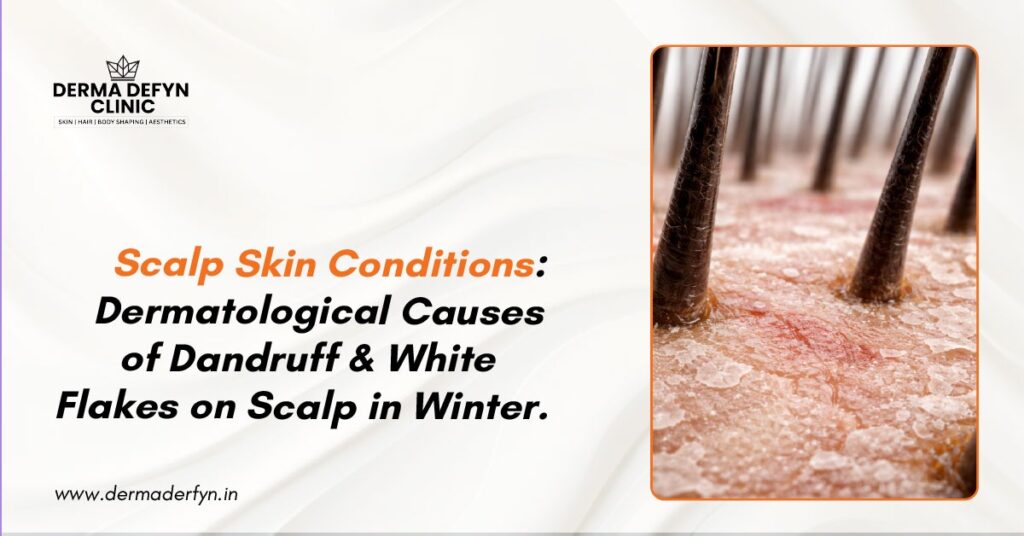
Winter can be harsh on your skin & your scalp is no exception. Many people notice white flakes on the scalp in winter, increased itching, and dryness that often gets mistaken for dandruff. Understanding the scalp skin conditions behind these symptoms is essential for choosing the right dandruff treatment in winter and maintaining healthy hair.
In this blog, we’ll explore the Best Dermatologist in Delhi, scalp dryness causes, and expert-approved winter hair care tips to keep your scalp flake-free.
Common Scalp Skin Conditions That Cause Dandruff
Not all flakes are the same. Dermatologists identify several scalp skin conditions that lead to dandruff or dandruff-like symptoms, especially during colder months.
1. Seborrheic Dermatitis
This is one of the most common dermatological causes of dandruff. It presents as:
- Greasy white or yellow flakes
- Red, inflamed scalp
- Itching that worsens in winter
Cold weather and reduced sunlight can aggravate seborrheic dermatitis, making winter dandruff more noticeable.
2. Scalp Psoriasis
Often confused with dandruff, scalp psoriasis causes:
- Thick, silvery-white flakes
- Dry patches extending beyond the hairline
- Persistent itching
These chronic scalp skin conditions tend to flare up in winter due to dryness and weakened skin barriers.
3. Fungal Overgrowth (Malassezia)
A naturally occurring yeast on the scalp can multiply in dry winter conditions, leading to:
- White flakes on the scalp
- Mild redness
- Recurring dandruff despite washing
White Flakes on Scalp in Winter: Dandruff or Dry Scalp?
Many people experience white flakes on scalp in winter that are actually caused by dryness rather than dandruff.
Dry Scalp Skin Conditions Symptoms
- Small, powdery white flakes
- Tight or itchy scalp
- No redness or oiliness
Dandruff Symptoms
- Larger flakes
- Oily or inflamed scalp
- Itching that persists year-round
Identifying the difference is key to choosing the correct dandruff treatment in winter.
Scalp Dryness Causes During Winter
Understanding scalp dryness causes can help prevent flaking before it starts:
- Cold air and low humidity
- Excessive use of hot water
- Over-washing hair
- Harsh shampoos with sulfates
- Indoor heating systems
- Lack of scalp hydration
Winter strips natural oils from the scalp, disrupting its protective barrier.
Effective Dandruff Treatment in Winter
Treating dandruff in winter requires a balance between medicated care and hydration.
1. Use Anti-Dandruff Shampoos
Look for ingredients such as:
- Ketoconazole
- Zinc pyrithione
- Salicylic acid (use cautiously for dry scalp)
Use 2–3 times per week or as recommended by a dermatologist.
2. Moisturize the Scalp
For dry scalp-related flakes:
- Use lightweight scalp oils
- Apply hydrating scalp serums
- Avoid heavy, pore-clogging products
3. Avoid Excessive Heat Styling
Heat worsens scalp dryness and irritation, increasing flaking in winter.
4. Consult a Dermatologist
If dandruff is persistent, severe, or accompanied by redness, it may indicate an underlying scalp skin conditions requiring medical treatment.
Winter Hair Care Tips for a Healthy Scalp
A good winter hair care routine can prevent dandruff and dryness:
- Wash hair with lukewarm water
- Limit shampooing to 2–3 times per week
- Use a gentle, sulfate-free shampoo
- Condition the scalp, not just hair ends
- Wear breathable caps to protect from cold air
- Maintain hydration and a balanced diet
Healthy hair starts with a healthy scalp, especially in winter.
When to Seek Medical Help
You should consult a dermatologist if:
- Dandruff does not improve with treatment
- There is severe itching or redness
- Flakes spread to eyebrows or ears
- Hair fall increases along with dandruff
These may signal chronic scalp skin conditions that need professional care.
Final Thoughts
Winter-related scalp issues are common but manageable. By understanding the dermatological causes of dandruff, identifying scalp dryness causes, and following proper winter hair care, you can effectively reduce white flakes on scalp in winter.
Choosing the right dandruff treatment in winter and knowing when to seek expert advice will help keep your scalp healthy, comfortable, and flake-free all season long.
Subscribe Now: @dermadefyn