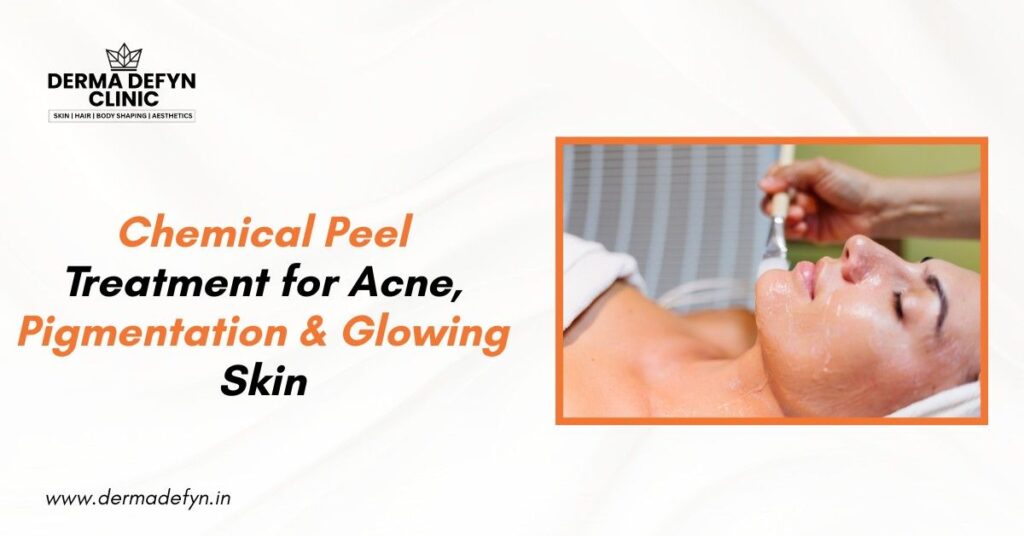
A chemical peel treatment is a skin procedure in which a dermatologist applies a special solution to the face. This solution removes dead skin cells from the top layer.
Think of it like this:
Your skin is like a wall with old paint. You can’t paint it properly unless you scrape off the bad layer first.
That “scraping” part?
Chemical peel treatments do just that. But safely. And consistently. As the surface layer is removed, new skin emerges. Brighter. Smoother. Healthier.
How Do Chemical Peel Treatments Work?
During a chemical peel treatment:
- Your skin is cleaned.
- A peel solution is applied.
- You may feel mild tingling.
- The solution is neutralised.
- Sunscreen is applied.
The acids used in chemical peel treatments break down dead skin cells, which speeds up skin renewal.
In simple terms:
Old skin out. New skin in. Over time, this helps:
- Acne
- Acne scars
- Pigmentation
- Dullness
- Uneven texture
What Are the Types of Chemical Peels?
Not all chemical peel treatment options are the same. The depth depends on your skin condition.
1. Superficial Peel (Light Peel)
Best for:
- Mild acne
- Dull skin
- Light pigmentation
These typically use glycolic or lactic acid. They take very little time. You may experience some flaking. They’re good for beginners.
2. Medium Peel
Best for:
- Acne scars
- Stubborn pigmentation
- Uneven tone
This often includes a TCA peel. Peeling is more visible & results are more pronounced.
3. Deep Peel
Used for:
- Deep scars
- Severe sun damage
Not everyone needs it. It should be done carefully. A good clinic will tell you what is appropriate and what is not.
Which Chemical Peel Treatments Are Best for Acne?
If acne is your main concern, certain peels work better.
For example:
- Salicylic acid peel benefits include oil control and reduced breakouts.
- Glycolic acid peel treatment improves skin texture.
- TCA peel helps with deeper acne scars.
Salicylic acid is great for oily skin. It penetrates pores and clears them. I’ve seen many clients think that one session will clear up years of acne. Skin doesn’t work that way. It’s like going to the gym. One workout won’t build muscle. Regularity is key.
Can Chemical Peel Treatments Help Pigmentation?
Yes. And this is where chemical peel treatments shine.
Pigmentation occurs when melanin builds up. These are the causes:
- Sun exposure
- Acne marks
- Hormonal changes
A chemical peel treatment removes pigmented surface cells and encourages new skin growth.
In many sessions, you may see:
- Lighter dark spots
- More even tone
- Less patchiness
But the key point here is that sunscreen is non-negotiable. Without sunscreen, pigmentation can return.
Do Chemical Peel Treatments Make Skin Glow?
Yes. After a few sessions of chemical peel treatments, many people notice:
- Brighter skin
- Smoother texture
- Smaller-looking pores
- Better makeup finish
Why? Because dead skin cells reflect less light. Fresh skin reflects more. It’s like cleaning a dusty mirror. Same mirror. Different shine.
How Many Sessions of Chemical Peel Treatments Are Needed?
This depends on your concern.
Generally:
- Mild acne → 3–4 sessions
- Pigmentation → 4–6 sessions
- Acne scars → 6–8 sessions
Sessions are usually spaced 3-4 weeks apart. One session is helpful, but multiple sessions consistently improve results.
What Happens After a Chemical Peel Treatment?
After your chemical peel treatments, you may notice:
- Mild redness
- Tightness
- Light peeling
This usually lasts for a few days.
Important aftercare steps:
- Use sunscreen daily.
- Avoid direct sun.
- Do not pick peeling skin.
- Use a gentle moisturiser.
- Avoid scrubs and strong serums for a few days.
Aftercare protects your results. Ignore it… and you may undo progress.
Are There Side Effects of a Chemical Peel?
When done properly, chemical peel treatments are safe.
Temporary effects may include:
- Redness
- Dryness
- Mild burning sensation
Serious complications are less likely when treated by trained professionals, so choosing the right clinic is crucial.
What Is the Chemical Peel Treatments Cost?
In India, chemical peel treatments usually cost between ₹2,000 and ₹8,000 per session.
Cost depends on:
- Type of peel
- Clinic expertise
- Skin concern
- Location
Cheaper isn’t always better. Skin isn’t a discount experiment.
Chemical Peel Treatments vs Home Peels
Home peels:
- Low strength
- Mild results
- Slower improvement
Professional chemical peel treatments:
- Controlled strength
- Targeted for your concern
- Faster visible changes
It’s like using a home hair cut kit and going to a trend stylist. Both cut hair, but the results are different.
Are Chemical Peel Treatments Safe for Indian Skin?
Yes. But customisation is essential. Indian skin can be pigmented, so peel strength should be chosen carefully. At clinics like Derma Defyn, a skin analysis is performed before beginning a chemical peel treatment. The peel type is chosen based on:
- Skin type
- Acne severity
- Pigmentation depth
- Sensitivity level
No one method is right for everyone. And that’s important.
Who Should Consider Chemical Peel Treatments?
You may benefit from a chemical peel treatment if you have the following conditions:
- Acne
- Acne marks
- Uneven skin tone
- Dull skin
- Enlarged pores
- Mild fine lines
If your skincare products aren’t enough… a professional peel can help.
Realistic Expectations From Chemical Peel Treatments
Chemical peel treatments improve skin. They don’t change your genetics. Deep scars may improve, but they won’t disappear completely. Pigmentation will fade gradually, not overnight.
But over time?
- Clearer skin
- Smoother texture.
- Healthier glow.
And that builds confidence.
Why Professional Guidance Matters
I’ve seen people try strong peels at home after watching a 30-second video. The results are rarely good. Skin isn’t a DIY science project. A proper chemical peel treatment includes:
- Skin assessment
- Right acid selection
- Correct timing
- Neutralization
- Aftercare advice
That structure protects your skin barrier. At Derma Defyn, the focus is on gradual improvement, not rapid peeling. The goal is long-term, healthy skin.
Frequently Asked Questions
Does chemical peel treatment hurt?
You may feel tingling. It’s usually mild and manageable.
How soon will I see results?
Glow may appear in a week. Acne and pigmentation improve over multiple sessions.
Can I go to work after chemical peel treatment?
Yes. Mild peels have little downtime. Medium peels may cause visible flaking for a few days.
Is chemical peel treatment permanent?
Results last if you maintain skincare and sun protection. But skin continues to age and face sun exposure.
Final Thoughts
If acne keeps coming back… if pigmentation doesn’t fade… if your skin looks dull no matter what you apply… a well-planned chemical peel treatment can help. Not instantly. Not magically. But consistently. Clear skin doesn’t mean doing more. It means doing the right things. In the right order. And sometimes, that starts with removing what your skin no longer needs.
Instagram Follow: @dermadefynofficial
Book your Consultation Now: Submit Your Skin Concern Here.